Every e-commerce business receives customer complaints.
It doesn't matter whether you process 100 orders a month or 100,000.
Packages get delayed.
Products arrive damaged.
Customers order the wrong size.
Payments fail.
Returns take longer than expected.
The difference between an average brand and an exceptional one isn't whether customers complain.
It's how those complaints are handled.
Research consistently shows that customers who experience a problem that is resolved quickly and fairly often become more loyal than customers who never experienced a problem at all.
In other words, every complaint is an opportunity.
Handled poorly, it leads to refunds, bad reviews, and lost customers.
Handled well, it builds trust, increases repeat purchases, and strengthens your brand.
In this guide, you'll learn a practical framework for handling customer complaints, common mistakes to avoid, and how automation and AI can help your support team resolve issues faster.
Why Customer Complaints Matter More Than You Think
Many businesses see complaints as a cost.
Successful e-commerce brands see them as feedback.
A complaint often reveals:
A confusing product page A shipping issue An unclear return policy A broken process A communication gap
Ignoring complaints means ignoring opportunities to improve your business.
Every complaint has the potential to affect:
Customer satisfaction Brand reputation Online reviews Customer lifetime value Repeat purchases
That's why complaint handling should be treated as a strategic business function rather than simply answering support tickets.
The Most Common Customer Complaints in E-commerce
Although every business is different, most complaints fall into a handful of categories.
Shipping Delays
Customers frequently ask:
Where is my order? Why hasn't it shipped? Why is tracking not updating?
These questions often increase during holiday seasons and promotional events.
Damaged Products
Receiving a damaged item creates immediate frustration.
Customers expect:
A quick acknowledgement Clear next steps A fair resolution
Delays usually make the experience worse.
Wrong Items
Shipping mistakes happen.
Customers want the issue corrected with as little effort as possible.
Complicated return processes only add frustration.
Refund Delays
Customers become anxious when refunds take longer than expected.
Setting realistic expectations from the beginning helps reduce complaints.
Poor Communication
Many complaints aren't about the original issue.
They're about not knowing what's happening.
Regular updates often prevent customers from becoming frustrated.
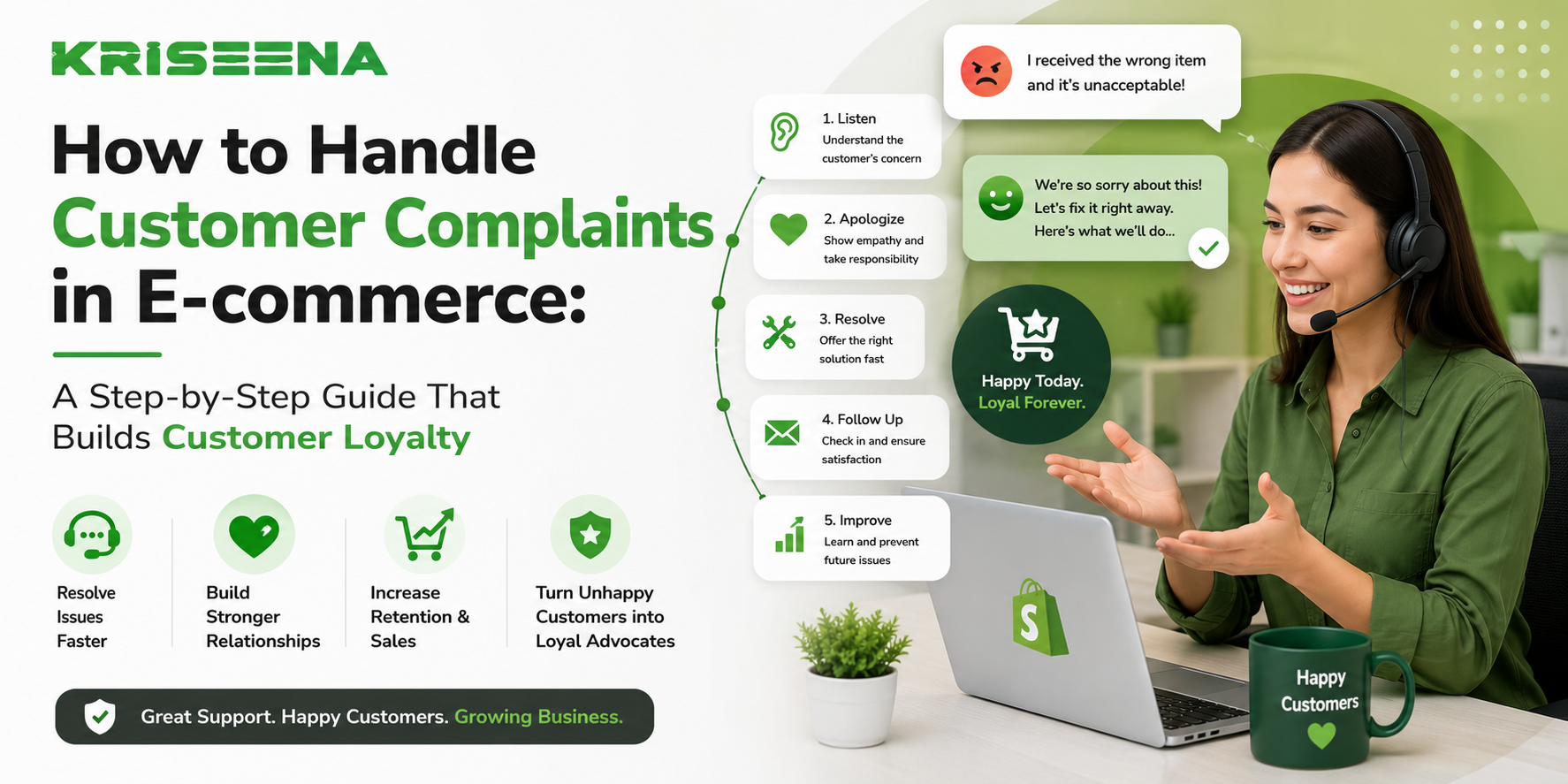
A 6-Step Customer Complaint Resolution Process
Following a consistent process helps agents deliver better outcomes.
Step 1: Respond Quickly
The first response sets the tone.
Even if you don't have an immediate solution, acknowledge the issue promptly.
Instead of waiting until you've investigated everything, let the customer know you're working on it.
Customers appreciate communication more than silence.
Step 2: Listen Carefully
Don't assume you understand the problem after reading the first sentence.
Read the entire conversation.
Look at:
Previous messages Order history Attachments Screenshots Tracking information
Understanding the complete context prevents unnecessary back-and-forth.
Step 3: Show Empathy
Customers want to know they've been heard.
Simple statements such as:
"I understand how frustrating this must be." "I'm sorry you've had this experience." "Thank you for bringing this to our attention."
help establish trust.
Empathy doesn't mean admitting fault.
It means acknowledging the customer's experience.
Step 4: Investigate Before Promising
Avoid making promises before understanding the situation.
Check:
Order details Shipping status Return eligibility Internal notes Warehouse updates
Accurate information leads to better resolutions.
Step 5: Offer a Clear Solution
Customers shouldn't have to guess what happens next.
Explain:
What you're doing What the customer needs to do Expected timelines Next steps
Clarity reduces follow-up questions.
Step 6: Follow Up
Many businesses close tickets immediately after providing a solution.
Instead, check whether:
The replacement arrived The refund was processed The customer received the updated shipment The issue was fully resolved
Following up demonstrates genuine commitment to customer satisfaction.
Examples of Effective Complaint Handling Scenario 1: Late Delivery
Poor response:
Your order is delayed. Please wait.
Better response:
I understand it's disappointing when an order doesn't arrive on time. I've checked your shipment, and it's currently in transit with the carrier. Based on the latest update, it should arrive within two business days. I'll continue monitoring the shipment and let you know if anything changes.
Scenario 2: Damaged Product
Instead of immediately asking multiple questions, acknowledge the issue first.
Then request:
Photos of the damage Order number Packaging condition
Once verified, explain whether you'll send:
A replacement A refund Store credit
Customers appreciate quick, decisive action.
Scenario 3: Wrong Item Received
Don't ask customers to repeatedly explain the situation.
Review their order history before responding.
Then clearly explain:
How the incorrect item will be returned When the replacement will ship Whether shipping costs are covered
Reducing customer effort significantly improves the experience.
Common Mistakes That Make Complaints Worse Using Generic Responses
Customers quickly recognize copy-and-paste replies.
Personalize responses using:
Customer name Product purchased Order details Previous interactions
Even small personal touches build trust.
Blaming Third Parties
Customers bought from your business.
They generally don't care whether the warehouse, shipping company, or supplier caused the issue.
Take ownership.
Coordinate with partners internally rather than redirecting responsibility.
Making Customers Repeat Information
Nothing frustrates customers more than repeating:
Order numbers Shipping details Previous conversations
Support platforms should give agents access to complete customer history.
Delaying Difficult Conversations
If a refund isn't possible, explain why promptly.
Delaying bad news often creates larger problems later.
Transparency builds credibility.
Closing Tickets Too Early
Closing conversations before confirming resolution often leads to:
Reopened tickets Lower satisfaction Negative reviews
Ensure customers are genuinely helped before ending the interaction.
How AI Can Improve Complaint Handling
AI isn't designed to replace empathy.
It's designed to remove delays.
Modern AI support systems can help by:
Instantly Retrieving Customer Information
Instead of manually searching Shopify, AI can surface:
Orders Shipping updates Previous conversations Customer history
This saves valuable time.
Suggesting Better Responses
AI can draft personalized responses that agents review before sending.
This improves consistency while reducing response time.
Identifying Urgent Complaints
AI can detect messages containing phrases such as:
"Very disappointed" "I want a refund" "I'll leave a review"
These conversations can be prioritized automatically.
Automating Routine Issues
Not every complaint requires human involvement.
AI can automatically answer common questions about:
Shipping delays Return policies Refund timelines Order tracking
Agents remain available for more sensitive situations.
Metrics to Measure Complaint Handling
Improvement requires measurement.
Track metrics such as:
Metric Why It Matters First Response Time Indicates responsiveness Resolution Time Measures efficiency First Contact Resolution Shows how often issues are solved without follow-ups Customer Satisfaction (CSAT) Measures customer perception Repeat Complaint Rate Reveals unresolved root causes Refund Rate Indicates product or service quality issues
Review these metrics regularly to identify trends before they become larger operational problems.
Building a Complaint Prevention Strategy
The best complaint is the one that never happens.
Reduce complaints by:
Setting accurate shipping expectations Writing clear product descriptions Publishing transparent return policies Providing proactive shipping updates Offering self-service resources Automating order tracking Training support agents consistently
Preventing complaints costs less than resolving them.
Conclusion
Customer complaints are an inevitable part of running an e-commerce business.
They don't have to become negative reviews or lost customers.
By responding quickly, listening carefully, showing empathy, and providing clear solutions, you can transform frustrating experiences into opportunities to strengthen customer relationships.
As your business grows, consistent complaint handling becomes even more important. Standardized processes, self-service resources, and AI-powered support help your team resolve issues faster while maintaining a high-quality customer experience.
If you're looking to streamline complaint handling, Kriseena helps Shopify and WooCommerce businesses automate repetitive customer inquiries, access live order data instantly, and equip support teams with the information they need to resolve issues efficiently. Customers get faster answers, and your team can focus on delivering exceptional service when it matters most.
Start your 14-day free trial today at https://kriseena.com.